Artificial Intelligence is evolving faster than ever, and two terms are now dominating the technology landscape — Generative AI and Agentic AI. While many businesses are already familiar with Generative AI tools like ChatGPT and Google Gemini, Agentic AI is emerging as the next major shift in intelligent automation.
For businesses in the USA and UK, understanding the difference between Generative AI and Agentic AI is becoming essential for staying competitive in digital transformation, automation, customer engagement, and web development.
In this guide, we’ll explain the core differences, real-world applications, business benefits, and how these AI technologies are shaping the future of modern businesses.
What is Generative AI?
Generative AI refers to artificial intelligence systems designed to create content, generate responses, and produce data-based outputs from user prompts. These systems are trained on massive datasets and can generate:
- text
- images
- videos
- code
- audio
- marketing content
- customer responses
Popular examples of Generative AI include:
- ChatGPT
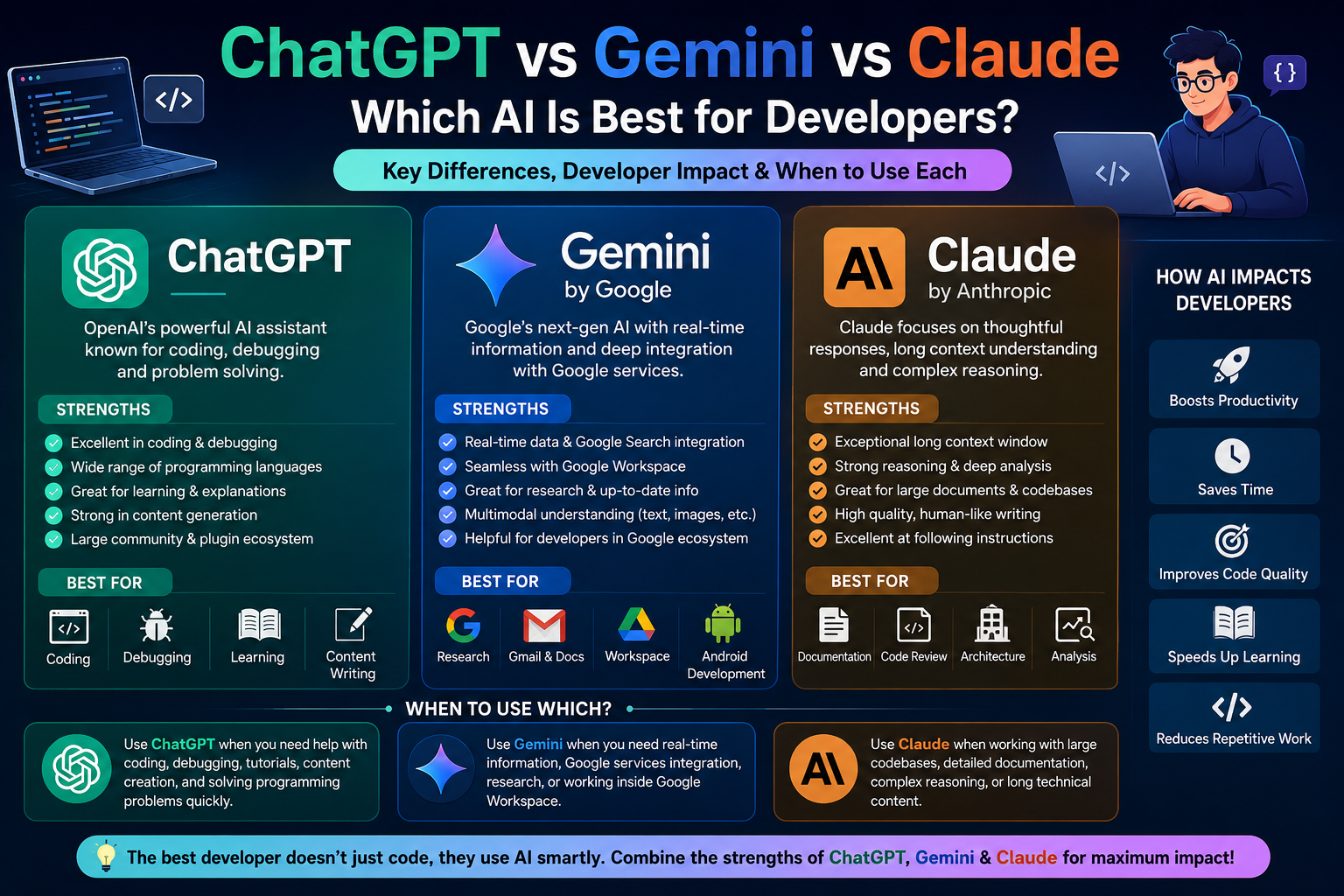
- Google Gemini
- Claude AI
- Midjourney
- GitHub Copilot
Generative AI focuses mainly on content creation and prediction. It responds to instructions provided by users and produces outputs based on patterns learned from training data.
Examples of Generative AI in Business
- AI-powered content writing
- automated customer support replies
- code generation for developers
- AI chatbots
- social media content creation
- product descriptions for eCommerce websites
Today, Generative AI is helping businesses improve productivity, reduce manual work, and accelerate digital operations.
What is Agentic AI?
Agentic AI is considered the next evolution of artificial intelligence. Unlike Generative AI, Agentic AI systems are designed not only to generate content but also to independently make decisions, plan tasks, execute workflows, and adapt based on objectives.
In simple terms:
Generative AI creates. Agentic AI acts.
Agentic AI systems can:
- analyze goals
- break tasks into steps
- interact with software tools
- automate workflows
- make decisions with minimal human intervention
These AI agents are designed to function more like autonomous digital assistants rather than simple response-based tools.
Examples of Agentic AI
- autonomous customer support agents
- AI workflow automation systems
- intelligent business assistants
- self-operating scheduling systems
- AI-powered software development agents
- autonomous data analysis systems
Businesses are increasingly exploring Agentic AI for advanced automation, operational efficiency, and intelligent business management.
Generative AI vs Agentic AI: Key Differences
| Feature | Generative AI | Agentic AI |
|---|---|---|
| Primary Purpose | Content generation | Autonomous task execution |
| User Dependency | Requires prompts | Works toward goals independently |
| Decision-Making | Limited | Advanced |
| Workflow Automation | Basic | High-level automation |
| Adaptability | Moderate | Dynamic and goal-driven |
| Human Involvement | Frequent | Minimal |
| Business Impact | Productivity enhancement | Intelligent operational automation |
While Generative AI focuses on producing responses, Agentic AI is focused on completing objectives.
This distinction is why many technology experts believe Agentic AI will become one of the biggest digital transformation trends in the coming years.
Why Businesses Are Moving Toward Agentic AI
Businesses across the USA and UK are rapidly adopting AI-powered automation to improve efficiency, reduce costs, and streamline operations.
Traditional automation tools often require manual workflows and rigid rule-based systems. Agentic AI introduces a more intelligent and flexible approach.
Key Benefits of Agentic AI for Businesses
1. Intelligent Automation
Agentic AI can automate repetitive business processes with minimal supervision, improving operational speed and accuracy.
2. Better Decision Making
AI agents can analyze large volumes of data, identify patterns, and make recommendations in real time.
3. Improved Customer Experience
Businesses can deploy AI agents for personalized customer support, automated communication, and intelligent query handling.
4. Enhanced Productivity
Teams can focus on strategic work while AI agents handle administrative and repetitive tasks.
5. Scalable Digital Operations
Agentic AI systems can manage complex workflows across multiple departments simultaneously.
As businesses continue investing in digital transformation, Agentic AI is expected to play a major role in the future of enterprise technology.
Real-World Use Cases of Agentic AI
The rise of Agentic AI is already transforming multiple industries.
Web Development and Technology
AI agents can assist developers by:
- generating code
- testing applications
- debugging software
- managing deployment workflows
This is significantly accelerating software development cycles.
eCommerce and Online Businesses
AI-powered systems can:
- manage customer interactions
- automate order processing
- recommend products
- optimize inventory workflows
Digital Marketing
Agentic AI tools can independently:
- analyze marketing performance
- optimize campaigns
- schedule content
- improve audience targeting
Customer Support
AI agents can resolve customer issues, escalate tickets, and provide 24/7 intelligent support experiences.
How Agentic AI Will Impact Web Development
The future of web development is becoming increasingly AI-driven.
Businesses are no longer looking only for visually attractive websites. They want:
- intelligent systems
- automation capabilities
- AI-powered user experiences
- smart integrations
- scalable digital infrastructure
This shift is creating new opportunities for web development companies to integrate:
- AI chatbots
- workflow automation
- intelligent recommendation systems
- AI-powered analytics
- customer behavior tracking
- personalized website experiences
As Agentic AI technology evolves, websites themselves may become autonomous digital platforms capable of managing customer interactions and business operations intelligently.
Which is Better: Generative AI or Agentic AI?
The answer depends on business goals.
Generative AI is ideal for:
- content creation
- creative workflows
- customer communication
- marketing support
- rapid content production
Agentic AI is ideal for:
- workflow automation
- operational management
- intelligent business systems
- enterprise automation
- AI-driven decision-making
In reality, the future will likely combine both technologies.
Businesses will use Generative AI for creativity and communication, while Agentic AI handles automation and execution.
Together, they represent the future of intelligent digital transformation.
The Future of AI-Powered Businesses
Artificial Intelligence is no longer just a technology trend — it is becoming a core business necessity.
Companies that adopt AI automation early will have significant advantages in:
- operational efficiency
- customer engagement
- digital scalability
- market competitiveness
The rise of Agentic AI is expected to redefine how businesses operate online, especially in sectors like:
- web development
- SaaS platforms
- eCommerce
- finance
- healthcare
- customer service
- digital marketing
Forward-thinking companies are already investing in AI-powered business systems to prepare for the next generation of intelligent automation.
Final Thoughts
The debate around Generative AI vs Agentic AI is shaping the future of technology and business innovation.
While Generative AI transformed how businesses create content and interact digitally, Agentic AI is now pushing the boundaries of autonomous decision-making and intelligent automation.
For businesses in the USA and UK, understanding these technologies is essential for staying competitive in an increasingly AI-driven world.
As AI continues evolving, companies that embrace intelligent automation, AI-powered workflows, and future-ready digital systems will be better positioned for long-term growth and innovation.
At BigWebs Technologies, we help businesses build future-ready digital solutions, AI-integrated platforms, and scalable web development systems designed for the modern era of intelligent automation.

Comments are closed