Businesses rely on software to manage customers, employees, payments, orders, learning, reporting and daily operations. When a standard website or plugin cannot support a required workflow, a tailored web application may be the next step. Laravel development is one option for building these systems because Laravel provides a structured PHP framework for web applications and APIs.
This guide explains what Laravel is, where businesses use it, what influences Laravel development cost and how to choose a Laravel development company or development partner.
What is Laravel development?
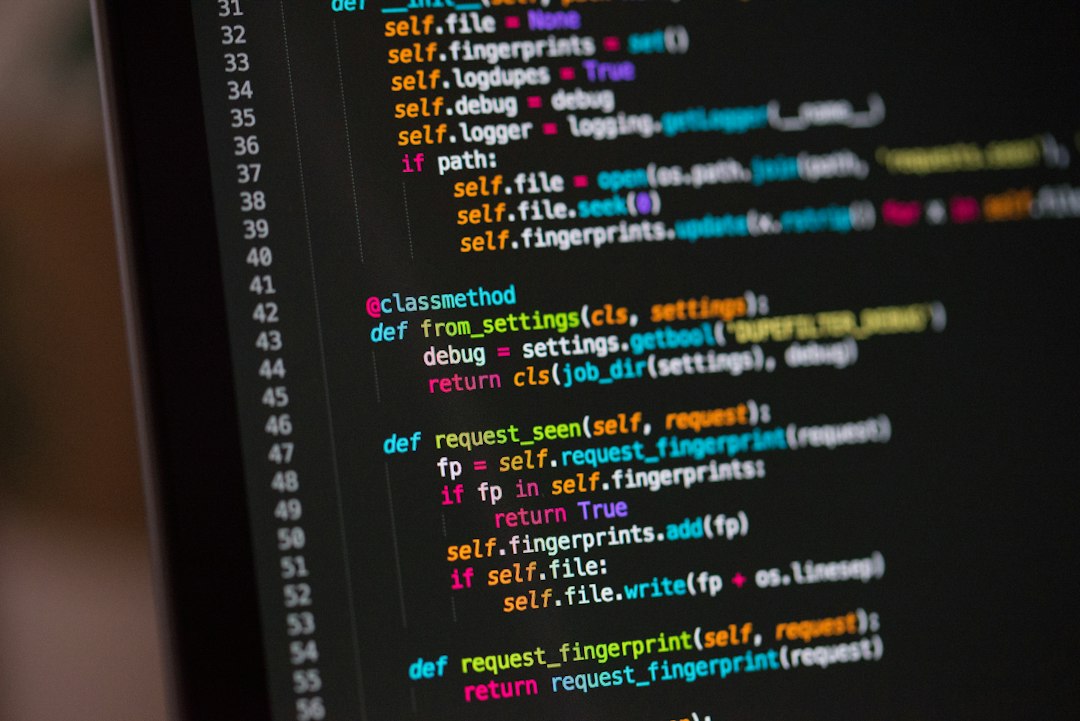
Laravel is an open-source PHP framework used to build web applications. A framework provides a foundation for common application tasks, allowing developers to focus on business-specific features instead of repeatedly writing infrastructure code. Laravel includes tools and conventions for routing, database interaction, queues, scheduled tasks, testing and application structure.
Laravel can power a full-stack application, where the server renders pages and handles business logic, or operate as an API backend for a separate frontend or mobile application. The official Laravel documentation describes these approaches and the framework’s capabilities.
Why businesses choose Laravel for web applications
Laravel’s value is not simply that it uses PHP. Its organised structure and ecosystem help teams build, test and maintain business applications consistently.
- Structured development: conventions for routes, controllers, models and requests make projects easier to organise.
- Database tools: migrations and Eloquent ORM help manage database structure and application data.
- Background processing: queues can move time-consuming tasks such as bulk notifications, imports and report generation out of the main user request.
- Scheduled tasks: recurring jobs can automate reminders, synchronisation and scheduled reports.
- Testing support: automated tests help verify important workflows as an application changes.
- API development: Laravel can provide backend services for mobile apps, JavaScript frontends and external integrations.
These capabilities do not make an application secure, fast or scalable automatically. Architecture, code quality, hosting, monitoring, testing and maintenance still matter.
Common Laravel use cases for businesses
1. Custom business management systems
A business may need one system for customers, staff, tasks, approvals, documents and operational records. Laravel can support role-based dashboards and workflows. Managers might approve requests while staff see only records assigned to them.
2. Customer and partner portals
A customer portal can let users register, manage profiles, submit requests, track progress and download documents. A partner portal can expose selected information to suppliers or distributors. Laravel can implement the authentication, permissions and data rules behind these experiences.
3. Ecommerce and booking platforms
Where a business has unusual pricing, booking, membership, stock or fulfilment rules, a tailored application may be more suitable than a standard store configuration. Laravel can handle product data, order workflows, payment-provider integrations and administration. Payment processing should use an appropriate provider, with careful handling of webhooks, failed transactions and order-state reconciliation.
4. Learning management and training platforms
Training organisations may need course catalogues, learner accounts, lessons, assessments, certificates, progress tracking and reporting. A Laravel-based learning management system can be shaped around different user types and training rules.
5. Reporting and workflow automation
Teams often spend time combining spreadsheets, exporting records and sending manual updates. A web application can centralise data, apply business rules and generate reports. Laravel queues and scheduled tasks are useful for large exports, notifications and periodic synchronisation.
6. API backends and integrations
Businesses often use several cloud services that need to share information. Laravel can expose or consume APIs to connect CRM, payment, identity, inventory and other platforms. Define the source of truth, authentication method and handling for failed or duplicated events before implementation.
How much does Laravel development cost?
There is no responsible single price for Laravel development without understanding the requirements. A small internal tool, a customer portal and a multi-module SaaS platform involve different levels of design, engineering, testing and operational responsibility. Cost is driven by scope and complexity, not simply by the framework.
Key cost factors include:
- Project scope: number of modules, screens, user journeys, roles and business rules.
- Design and user experience: simple admin screens versus detailed responsive customer journeys.
- Database and migration: volume and quality of existing data, plus import and validation requirements.
- Integrations: payment gateways, email, identity providers, CRM, accounting and other APIs.
- Security and compliance: access controls, audit trails, encryption, retention and privacy requirements.
- Reporting and automation: dashboards, exports, background jobs and complex calculations.
- Quality assurance: automated tests, browser testing, performance checks and security review.
- Hosting and operations: server configuration, backups, monitoring, deployment and production support.
Ask a Laravel development company to separate discovery, design, development, testing, launch and ongoing support in its estimate. A phased plan can deliver the most important workflow first and defer lower-priority features until users have tested the initial release. This makes scope and spending easier to manage.
How to choose a Laravel development company
Choosing a development partner is as important as choosing the framework. Look for a team that understands business processes, communicates clearly and can support the application beyond its first release.
- Review relevant experience: ask for examples of portals, dashboards, workflow systems or integrations similar to your requirements.
- Test the discovery process: a good partner asks about users, exceptions, approvals, reports, data and success measures before promising a fixed scope.
- Discuss architecture: ask how the application will be structured, how permissions work and how integrations will be monitored.
- Ask about testing and security: discuss code review, automated tests, dependency updates, backups, access controls and incident response.
- Clarify ownership: confirm who owns the source code, repository, domain, hosting accounts, database and third-party subscriptions.
- Understand support: agree response times, maintenance responsibilities, bug-fix terms, backups and upgrade plans.
- Check communication: request milestones, demonstrations, documented decisions and a clear change-approval process.
A professional Laravel development partner should explain trade-offs in plain language. They should not promise that a framework alone guarantees security, performance or business success.
Questions to ask before starting a Laravel project
- What is the first business problem the application must solve?
- Which users need access, and what should each role be allowed to do?
- Which existing systems must exchange data with the application?
- What information needs to be migrated, retained or audited?
- What is essential for the first release, and what can wait?
- How will the application be tested, deployed, backed up and monitored?
- What recurring costs should we budget for after launch?
Prepare answers before requesting proposals. Even a short requirements brief can help a provider produce a realistic estimate and reduce misunderstandings during delivery.
Laravel vs other development approaches
Laravel is not the right answer for every project. A content-focused website may be better served by WordPress or another content management system. A standard ecommerce shop may launch faster on a mature ecommerce platform. A mobile-first product may need a dedicated mobile frontend supported by an API backend. Laravel is worth evaluating when a project needs custom workflows, structured business logic, database-driven features or integrations beyond a standard website.
Base the decision on product requirements, team skills, existing systems, expected growth and long-term support—not framework popularity alone.
How Bigwebs supports Laravel and custom web application projects
Bigwebs Technology works on websites and tailored software solutions for businesses. For a Laravel project, start by understanding the workflow, user roles, data, integrations and reporting needs. The project can then be divided into practical milestones with clear deliverables and a support plan.
If you are evaluating Laravel development services, explore our web and software development services, view our portfolio, or contact Bigwebs to discuss your project.
Frequently asked questions
Is Laravel suitable for large business applications?
Laravel can be used for substantial business applications, but the result depends on architecture, infrastructure, code quality, monitoring and operational practices. Scale should be planned and tested against real workloads.
Can Laravel be used to build APIs?
Yes. Laravel can act as an API backend for web frontends, mobile applications and external integrations. Authentication, permissions, validation and versioning should be designed for the use case.
Is Laravel suitable for ecommerce?
It can support custom ecommerce workflows, but a standard platform may be more economical when its built-in features meet the requirements. Compare both approaches first.
What affects the timeline of a Laravel project?
Scope, integrations, data migration, design complexity, testing and stakeholder feedback all affect delivery. A provider should estimate after discovery and define milestones.
Final thoughts
Laravel is a capable foundation for custom business applications, portals, workflow systems and API backends. Its value comes from solving a clearly defined business problem with maintainable architecture and a realistic support plan. Before choosing a Laravel development company, compare experience, discovery, security, testing, ownership and long-term costs. A well-scoped first release is usually a stronger starting point than building every possible feature at once.
Further reading: Official Laravel documentation.